
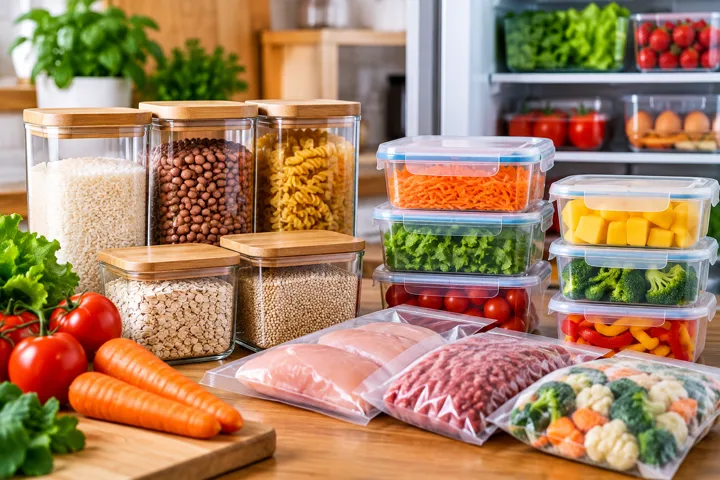
 Food preservation
 15 minutes
 5 steps
Proper food preservation is essential to reduce waste, preserve quality, and minimize contamination risks. The main rule is to separate raw foods from ready-to-eat foods, control storage temperature and time, and respect expiration dates. With growing awareness of sustainability, learning to store food efficiently not only saves resources but also helps reduce waste.
Why is food preservation important?
Food waste has significant environmental and social impacts. According to FAO data, about 1/3 of the food produced globally is wasted, and in Brazil, each person wastes an average of 41.6 kg of food per year. Proper preservation helps prevent this waste, preserving natural resources and reducing household costs. In addition, improperly stored food can lose nutrients, quality, and safety, increasing the risk of illness.
How to organize the refrigerator and freezer
Proper organization of the refrigerator and freezer is essential to maintain a stable temperature and prevent food spoilage. The ideal refrigerator temperature is between 0°C and 4°C, while the freezer should be kept at -18°C or below. Do not block the air vents, as this affects circulation and appliance efficiency.
How to store different types of food
Fruits and vegetables should be stored unwashed, separated by type, and in appropriate places. Meat, poultry, and fish should be kept in sealed containers on the bottom shelf of the refrigerator. Prepared foods should be refrigerated within 2 hours of preparation and frozen in smaller portions to make them easier to use.
Common mistakes and how to avoid them
Avoid washing fruits and vegetables before storing them, overloading the refrigerator, failing to label frozen foods, and placing hot foods in the freezer. These mistakes can accelerate spoilage and increase the risk of contamination.
Step-by-step guide to preserving food
Essential practices for reducing waste
-
1
Check expiration dates
Separate perishable foods from non-perishable foods and organize them by date.
-
2
Adjust the temperature
Make sure the refrigerator and freezer are at appropriate temperatures.
-
3
Separate raw and ready-to-eat foods
Use sealed containers to prevent contamination.
-
4
Store fruits and vegetables correctly
Use humidity-controlled drawers and avoid mixing foods.
-
5
Refrigerate or freeze prepared food
Keep prepared food in shallow, sealed containers within the maximum storage period.
Ideal storage temperature
| Location | Temperature | Tip |
|---|---|---|
| Refrigerator | 0°C to 4°C | Do not block the air vents |
| Freezer | -18°C or below | Label frozen foods |
Important Tips

Make shopping lists and avoid buying too much.
Prioritize foods that are close to their expiration date.
Use reusable packaging such as glass containers and cloth bags.
Use peels and stalks to make broths or seasonings.
Compost organic waste to produce fertilizer.
Frequently asked questions
Quick answers to common questions.
When should I discard food?
Discard food with mold, swollen packaging, unexpected fermentation, altered odor, unusual texture or color, an expired date, or improper storage. Even before the expiration date, discard food that has been stored incorrectly or shows changes.