
 Plumbing
 6 steps
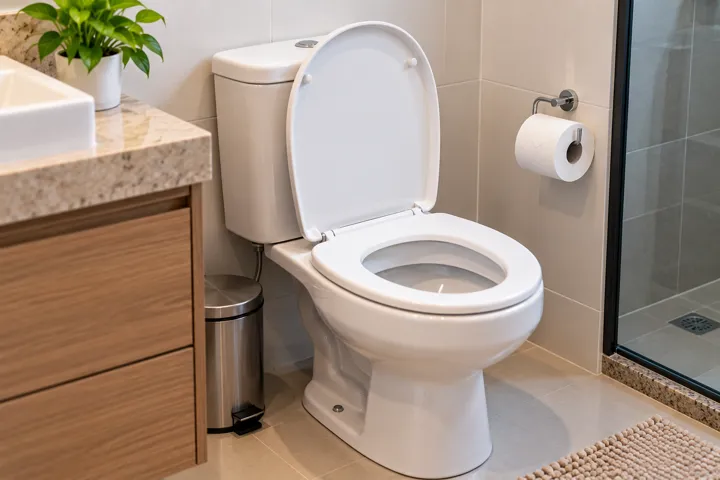
A clogged toilet can cause inconvenience, bad odors, and even overflows if not handled correctly. In many cases, the blockage is caused by excess toilet paper, improper disposal of waste, or small obstructions located near the toilet outlet. Before resorting to more complex solutions, there are simple checks and attempts that may help solve the problem safely. The most important thing is to avoid actions that worsen the situation or damage the plumbing.
What usually causes a toilet to clog
Many clogs occur because materials not designed to pass through the pipes are disposed of improperly. Wet wipes, sanitary pads, cotton swabs, and other waste are among the most common examples.
Even when only toilet paper is flushed, too much accumulated in a short time can make water flow difficult, especially in older installations or those with a history of blockages.
How to identify the severity of the problem
Not every clog has the same severity. In some cases, water can still drain slowly, indicating a partial blockage. In others, the blockage prevents virtually any water from passing.
Observing how the toilet flush behaves helps determine the next steps. The earlier the problem is identified, the greater the chances of solving it with simple methods.
When a plunger may solve the problem
A plunger is one of the most commonly used tools for blockages located near the toilet outlet. It works by creating pressure and suction to dislodge the blockage.
Although effective in many situations, it does not solve every type of clog. Trapped solid objects or deep blockages may require other approaches.
Common mistakes that should be avoided
One of the most common mistakes is insisting on several consecutive flushes. In addition to increasing the risk of overflow, this can spread contaminated water around the bathroom.
Another common mistake is using chemicals without understanding their purpose or limitations. Depending on the situation, they may not solve the problem and may create additional risks during future interventions.
How to distinguish a local problem from a sewer-system fault
When only one toilet has difficulty draining, there is a greater likelihood that the blockage is close to the fixture itself.
However, if other points in the home also drain slowly or have water backing up, the problem may be located in a broader part of the sewer system, requiring a different analysis.
When to seek specialized assistance
Some situations justify professional help from the start, especially when there is suspicion of an object trapped in the pipe or a recurring history of clogs.
Specialized professionals have equipment capable of locating and removing blockages without causing unnecessary damage to the plumbing.
How to prevent new clogs
Prevention depends mainly on usage habits. Using the toilet only for the waste it is designed to handle significantly reduces the risk of blockages.
It is also important to act quickly when signs such as slow drainage, unusual noises, or partial water backup appear, because small problems tend to be easier to solve than complete blockages.
Step-by-step guide to dealing with the clog
Safe actions to try to solve the problem without causing additional damage
-
1
Stop flushing
If the water is rising or taking a long time to drain, avoid flushing repeatedly. Wait for the level to drop to reduce the risk of overflow and allow a safer assessment of the situation.
-
2
Check the severity of the blockage
Check whether the water drains slowly or remains still. Partial drainage may indicate a less severe blockage, while no drainage suggests a more significant obstruction.
-
3
Use a suitable plunger
Position the plunger so that the rubber cup completely covers the toilet outlet. Use firm movements to create pressure and suction. If the water begins to drain better, repeat the process a few times.
-
4
Wait and test again
After a successful attempt, wait a few minutes before testing with a small amount of water. This helps confirm whether the passage has actually been cleared.
-
5
Check other points in the property
Check whether sinks, drains, or other toilets are having drainage problems. If several points are affected, the blockage may be in the main pipe.
-
6
Seek professional help when necessary
If the clog persists, returns frequently, or there is suspicion of an object trapped in the pipe, a professional assessment may be the safest and most effective option.
Quick clog diagnosis
| Symptom | Possible cause | What to do |
|---|---|---|
| Water rises after flushing | Partial or complete blockage | Avoid further flushing and begin assessment |
| Very slow drainage | Buildup of paper or waste | Try unclogging with a plunger |
| Problem returns frequently | Deeper blockage | Consider professional inspection |
| Several points in the house are affected | Problem in the sewer system | Investigate the main pipe |
| Persistent bad odor | Accumulated waste or impaired drainage | Assess the need for maintenance |
Important Tips

Avoid flushing sanitary pads, wet wipes, cotton swabs, and dental floss down the toilet.
Keep a trash can nearby for waste that should not be flushed.
Watch for signs of slow drainage before the clog becomes complete.
Teach children which objects should not be thrown into the toilet.
Carry out periodic inspections if the property has a history of clogs.
Do not use improvised objects that could damage the toilet bowl.
Frequently asked questions
Quick answers to common questions.
Can I flush several times to try to unclog it?
It is not recommended. If the water is already rising slowly, additional flushes can cause an overflow and make the area messier. Ideally, wait for the water level to go down before trying any solution.
Can toilet paper clog the toilet?
In normal amounts, generally not. However, too much paper, heavy-duty paper, or buildup together with other materials can contribute to blockages.
Does bleach unclog a toilet?
No. Common cleaning products generally do not remove physical blockages caused by paper, objects, or accumulated waste. In some cases, improper use of chemicals can even make later interventions more difficult.
What could be happening when the plunger does not work?
The blockage may be deeper in the pipe or may have been caused by a solid object. In these cases, simple methods may not be enough to solve the problem.
How can I tell whether the problem is only in the toilet or in the sewer system?
If other drains, sinks, or toilets in the property also drain slowly or have water backing up, there may be a broader blockage in the sewer piping.
Is it safe to use chemical drain cleaners?
Use requires caution. Some products can damage pipes, cause dangerous reactions, or make maintenance work more difficult. Always follow the manufacturer's instructions and avoid mixing products.
When should I call a professional?
When simple attempts do not work, the problem returns frequently, there is suspicion of a trapped object, or there are signs of a blockage in the property's sewer system.
Related content
More practical solutions in Plumbing.
Leaking Faucet
Learn how to repair a dripping faucet, identify the faulty component, and prevent water waste.
 30 minutes
Clogged Sink
How to desentupir pia of the cozinha or banheiro with métodos mecânicos and safes, without soda cáustica.
15-30 minutes