
 Appliances
 6 steps
When a noisy refrigerator draws attention, there is not always a problem. Many sounds are part of normal appliance operation, especially in models with automatic defrost, internal fans, and modern refrigeration systems. The challenge is identifying which sounds are expected and which may indicate a need for maintenance. Observing the type and frequency of the noise and whether it is accompanied by other symptoms helps distinguish a normal situation from a possible defect.
Why refrigerators make noise
Every refrigerator produces some level of noise during operation. This happens because several components work continuously to maintain the proper temperature, including the compressor, fans, and refrigerant circulation system.
As technology has evolved, some modern models produce sounds different from those found in older appliances. Therefore, a sound that seems unusual to the user does not always mean there is a defect.
Noises considered normal
Occasional popping sounds usually occur because internal materials expand and contract as the temperature changes. These sounds may occur during cooling or after the doors are opened.
It is also common to hear light humming, sounds similar to running water, or small clicks related to operation of the compressor and automatic temperature-control systems.
Vibrations caused by installation
One of the simplest causes to resolve involves appliance positioning. Unlevel refrigerators can transmit vibrations to the floor, walls, or nearby furniture.
In addition, containers placed on top of the appliance or touching its sides can amplify noises that would normally go unnoticed.
When noise may indicate a problem
Sudden changes in the sound pattern deserve attention, especially when accompanied by other symptoms. Loud metallic noises, frequent knocking, or excessive vibration may indicate the need for further investigation.
The situation becomes more significant when the refrigerator also has difficulty cooling, increased internal temperature, or apparently irregular operation.
How to distinguish normal sounds from faults
A practical way to evaluate the situation is to observe the frequency of the noise. Occasional and predictable sounds are generally part of normal appliance operation.
On the other hand, persistent noises that become increasingly loud or are associated with malfunction generally justify more detailed checks or specialized technical support.
Measures that help reduce noise
Keeping the refrigerator clean on the outside, properly positioned, and with adequate ventilation space contributes to more efficient and quieter operation.
It is also important to avoid overloading shelves with objects that may vibrate and to periodically check whether the appliance remains stable on the floor.
When to call technical service
If the noise is excessive, appears suddenly, or is accompanied by loss of performance, a professional evaluation can help safely identify the source of the problem.
Avoiding disassembly without technical knowledge reduces the risk of damage to the appliance and helps preserve the warranty when it is still valid.
Step-by-step guide to evaluating refrigerator noises
Simple checks to distinguish normal sounds from possible problems
-
1
Identify the type of noise
Determine whether the sound is a pop, hum, vibration, click, or noise similar to circulating water. Identifying the type of sound helps distinguish normal behavior from possible faults.
-
2
Check the refrigerator's leveling
Check whether the appliance is stable on the floor and does not rock. An unlevel appliance can generate vibrations and noises that disappear after the feet are properly adjusted.
-
3
Move objects away from the appliance
Check whether containers, furniture, or utensils are touching the refrigerator. Minor contact can amplify vibrations and create noises that seem more serious.
-
4
Observe cooling performance
Check whether food and beverages are still being cooled normally. If the noise is accompanied by loss of cooling, the situation requires additional attention.
-
5
Listen carefully to the rear area
Without disassembling the appliance, try to determine whether the sound seems to come from the compressor area or the external rear parts. This can help determine whether the noise is related to normal system operation.
-
6
Seek service if there are unusual signs
If the noise is excessive, appears suddenly, or is accompanied by abnormal heating, intense vibration, or cooling failure, consider a specialized technical evaluation.
Quick noise diagnosis
| Observed noise | Possible cause | What to do |
|---|---|---|
| Occasional popping sounds | Component expansion | Normal in many models |
| Sound of circulating water | Refrigerant movement or defrosting | Normal in most situations |
| Constant vibration | Unlevel appliance or contact with objects | Check installation and surrounding space |
| Moderate humming | Compressor operation | Normal during cooling |
| Loud metallic noise | Possible mechanical problem | Evaluate the need for technical service |
Important Tips

Keep the refrigerator level according to the manufacturer's instructions.
Avoid placing the appliance directly against furniture or walls.
Periodically clean accessible exterior areas.
Check whether containers or objects inside are vibrating.
Do not block the internal air vents.
Record sudden changes in noise to make diagnosis easier.
Frequently asked questions
Quick answers to common questions.
Is it normal for the refrigerator to make popping sounds during operation?
Yes. Many models produce popping sounds caused by the expansion and contraction of plastic and metal parts due to temperature changes. These sounds are usually occasional and do not indicate a defect.
Why does my refrigerator make a constant humming sound?
A light humming sound is usually related to operation of the compressor or internal fans. This noise is generally normal, especially during cooling cycles.
Is the sound of running water inside the refrigerator normal?
In most modern models, yes. This sound can be caused by refrigerant circulation or the automatic defrost process.
When does noise indicate a possible defect?
Very loud, metallic, repetitive noises accompanied by loss of cooling, excessive vibration, or an unusual smell may indicate the need for a technical inspection.
Can an unlevel refrigerator make noise?
Yes. When the appliance is not properly leveled, vibration, squeaking, and contact sounds between components or nearby furniture can occur.
Is it dangerous to keep using a refrigerator that makes a lot of noise?
It depends on the cause. If the noise is new, loud, or accompanied by operating problems, investigate the issue to prevent greater damage to the appliance.
Can cleaning the back of the refrigerator reduce noise?
In some cases, yes. Dust buildup can hinder heat dissipation and increase the load on components, contributing to certain types of noise.
Related content
More practical solutions in Appliances.

Refrigerator not cooling properly: how to identify the problem
Refrigerator not cooling: check power, temperature, seal, and air circulation before calling technical assistance.
 15 minutes
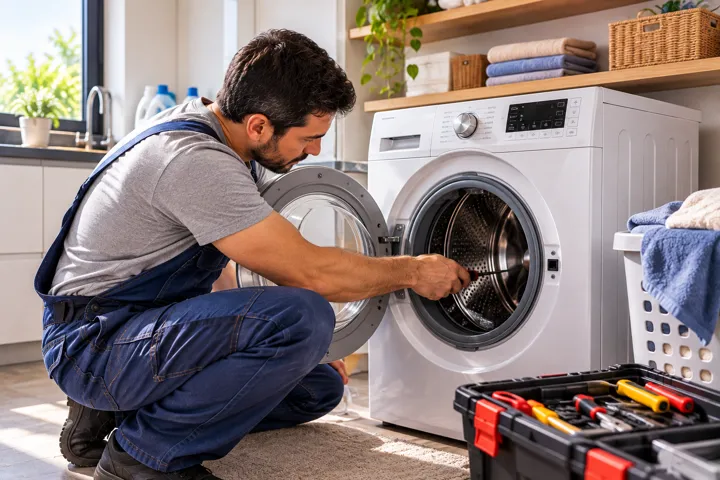
Washing machine won't spin: common causes and solutions
Find out why the washing machine does not spin, the most common causes, and what to check before calling technical service.
15 to 30 minutes for the initial checks