
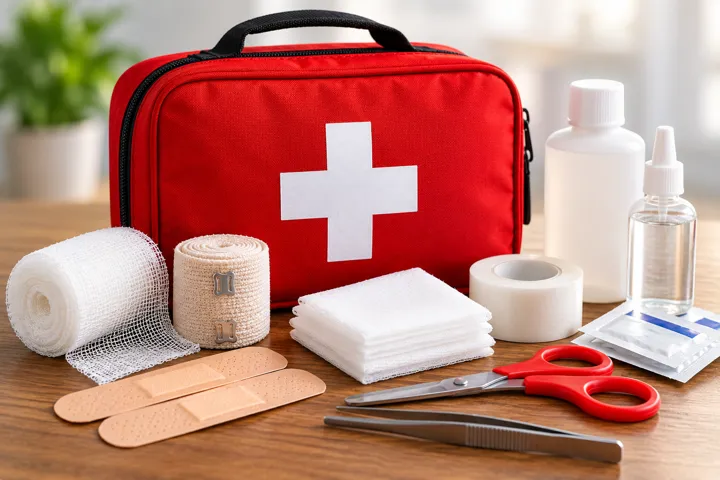
 First aid
 10 minutes
 5 steps
Minor burns can happen at home after contact with heat, hot liquids, or other sources of injury. Proper first aid can reduce pain and help limit further tissue damage. This guide explains what to do immediately, how to care for the affected area, and when to seek medical attention.
Causes and Effects
Minor burns may be caused by contact with hot surfaces or liquids, excessive sun exposure, or other sources of heat. Common effects include pain, redness, and sometimes blistering. Chemical and electrical burns require special caution and may need urgent medical evaluation.
First Aid: Step by Step
1. Move away from the source of the burn. 2. Cool the area under cool or lukewarm running water for about 20 minutes. 3. Carefully remove tight items such as jewelry if they are not stuck to the skin. 4. Protect the area with a sterile non-stick dressing. 5. Do not burst blisters. 6. Do not apply household remedies such as butter or oil. 7. Monitor symptoms and seek medical care when necessary.
What to Avoid
Do not apply ice directly to the skin, intentionally burst blisters, use household remedies such as butter or oil, expose healing skin to unnecessary sun, or pull away material stuck to the burn. These actions can worsen tissue damage or increase the risk of complications.
When to Seek Medical Attention
Seek medical attention for burns involving critical areas such as the face, hands, feet, genitals, major joints, or eyes; large or deep burns; chemical or electrical burns; signs of infection; or burns in very young children, older adults, or anyone whose condition causes concern. Circumferential burns also require professional evaluation.
Care After a Burn
Keep the area clean and protected, avoid sun exposure while it heals, and use only creams or ointments recommended by a healthcare professional. Do not pull away material stuck to the burn, and seek medical advice if you are unsure about healing or severity.
Practical Tips
Protect the healing area, avoid activities that may irritate the burn, monitor it for changes, and do not use household remedies. Use an appropriate dressing or loose clothing to protect the area when needed.
First Aid Steps
Essential steps for caring for a minor burn
-
1
Move away from the source
Immediately stop contact with the source of the burn. For an electrical injury, disconnect the power source safely before touching the person, and seek appropriate medical care.
-
2
Cool the burn with running water
Cool the burn under cool or lukewarm running water for about 20 minutes. Do not use ice or very cold water directly on the skin.
-
3
Protect the affected area
After cooling, cover the burn loosely with a sterile non-stick dressing or clean material that will not stick to the wound.
-
4
Do not burst blisters
Do not intentionally burst blisters. If a blister breaks, keep the area clean and protected and seek medical advice if needed.
-
5
Monitor the symptoms
Monitor the injury and seek medical care if there are signs of a more serious burn, infection, or worsening symptoms.
When to Seek Medical Attention
| Situation | Action | Notes |
|---|---|---|
| Burns in critical areas | Seek prompt medical evaluation | Face, hands, feet, genitals, major joints, or eyes |
| Large or deep burns | Seek medical evaluation | Burns that are extensive, deep, or larger than the person's hand require professional assessment |
| Chemical or electrical burns | Seek urgent medical care | Require specialized assessment and treatment |
| Signs of infection | Contact a healthcare professional | Increasing redness, swelling, pus, worsening pain, or fever |
| Burns in children or older adults | Consider prompt medical evaluation | Greater risk of complications depending on severity and size |
Important Tips

Keep healing skin moisturized with products recommended by a healthcare professional
Protect healing skin from sun exposure
Use a suitable non-stick dressing or loose clothing to protect the area when appropriate
Do not pull away material that is stuck to the burn
Seek medical advice if you are unsure about the severity of the burn
Frequently asked questions
Quick answers to common questions.
What should I do if the skin is peeling after a burn?
Do not pull off peeling skin, as this can further damage the area. Keep the burn clean and protected, and seek medical advice if you notice signs of infection.
Is it safe to use ice to cool a burn?
No. Ice can cause additional tissue damage. Cool the burn under cool or lukewarm running water for about 20 minutes instead.
Can I use home remedies such as butter or oil on a burn?
No. Household substances such as butter or oil can trap heat, contaminate the burn, and interfere with care. Avoid applying creams or ointments unless recommended by a healthcare professional.