
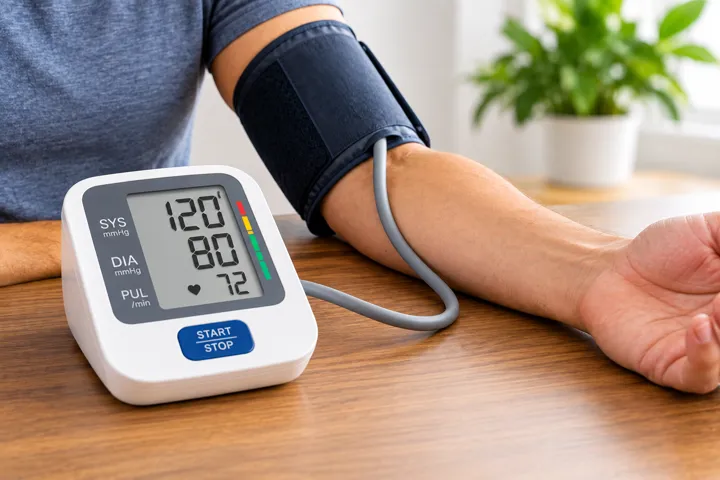
 Blood pressure
 10 minutes
 3 steps
Elevated blood pressure can increase the risk of serious health problems, including cardiovascular disease and stroke. This article explains what to do after a high reading, including proper measurement techniques, warning signs that require urgent care, and strategies for managing blood pressure. Prevention and medical follow-up are important for reducing complications.
What is blood pressure and why is it important?
Blood pressure is the force of circulating blood against the walls of your blood vessels. Persistently elevated readings may indicate hypertension and can increase the risk of problems affecting the heart, kidneys, brain, and blood vessels. A diagnosis should be based on appropriate measurements and medical evaluation rather than a single reading.
Causes and risk factors for high blood pressure
Factors associated with high blood pressure include a high-sodium diet, physical inactivity, excess body weight, chronic stress, age, family history, and certain medical conditions. Individual risk varies, so medical evaluation is important.
Symptoms and when high blood pressure is an emergency
High blood pressure often causes no symptoms. A reading of 180/120 mmHg or higher should be repeated after a short period of rest. If it remains that high and is accompanied by symptoms such as chest pain, shortness of breath, weakness or numbness, difficulty speaking, or vision changes, seek emergency medical care immediately.
What to Do When Your Blood Pressure Reading Is High
Essential steps for safe assessment and appropriate medical care
-
1
Repeat the measurement accurately
Use proper positioning, avoid factors that can temporarily affect the reading, and use a validated blood pressure monitor with the correct cuff size.
-
2
Assess the situation calmly
Sit quietly, relax, breathe normally, and consider whether temporary factors may be affecting the reading.
-
3
Seek medical guidance
Bring your blood pressure records to your healthcare appointment, do not change or take medication without medical guidance, and seek immediate help for emergency warning signs.
Factors, Warning Signs, and Actions for Elevated Blood Pressure
| Factor | Possible Effect | Action |
|---|---|---|
| High-sodium diet | Blood pressure may be elevated, often without symptoms | Reduce sodium intake as advised by a healthcare professional |
| Physical inactivity | Increases long-term cardiovascular risk | Follow an appropriate physical activity plan |
| Chronic stress | May temporarily raise blood pressure | Use stress-management strategies and seek medical guidance when needed |
Important Tips

Monitor your blood pressure regularly at home and during medical appointments
Adopt a healthy lifestyle with a balanced diet and regular physical activity
Avoid mistakes such as self-medicating or ignoring repeatedly elevated readings
Frequently asked questions
Quick answers to common questions.
How do I measure blood pressure correctly?
Sit in a calm environment with your back supported and your arm at heart level. Use the correct cuff size and avoid caffeine or smoking for at least 30 minutes before measuring.
When should I seek medical help?
Seek immediate medical care if your blood pressure is 180/120 mmHg or higher and you have symptoms such as chest pain, vision changes, or difficulty breathing.